

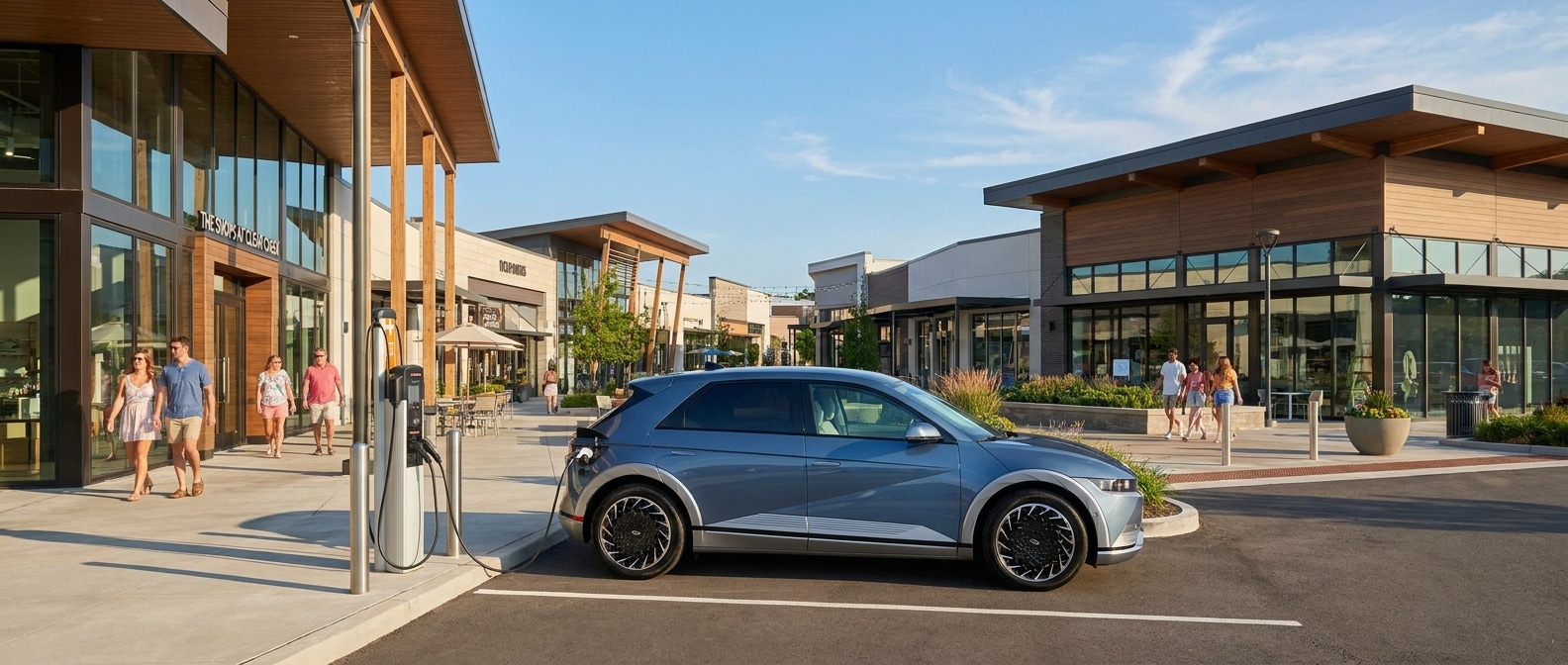
Shopping a used IONIQ 5 near south Nashville, and the generic "which year is best" guides aren't landing? We get why. They list recall counts without telling you what the recall actually does to the car mid-drive, and they compare battery packs without mentioning that a 15-mile I-24 run to downtown doesn't demand the same hardware as a Chattanooga road trip. We've walked buyers through these questions right here in our showroom, and the honest answer comes down to two things. Does the car's recall history check out as resolved, and does the range spec actually fit your daily mileage? Read on for the year-by-year breakdown.
- Sweet-spot years are 2024 (post-facelift, larger battery option, ICCU recall likely completed) and 2026 (fewest NHTSA complaints of any model year on record so far, cleanest available used supply starting to reach market).
- The 2022 is the year to approach carefully: it carries the highest NHTSA complaint volume of any IONIQ 5 model year and was the originating vehicle for the ICCU limp-home recall. Always verify recall completion by VIN before buying.
- For a south Nashville commuter doing under 40 miles round-trip daily, the 245-mile EPA-estimated Standard Range RWD covers the run many times over. You don't need the 318-mile pack for a Tanger Outlets errand run.
- The 2026 IONIQ 5 includes a Level 1/Level 2 charging cable as standard equipment. Earlier years did not always include it.
- Every used IONIQ 5 purchase should start with a free VIN check at NHTSA.gov to confirm open vs. completed recall status.
Browse our current used IONIQ 5 inventory
Which model years are the sweet spot for a used IONIQ 5?
For a used buy, the 2024 and 2025 model years hit the most useful intersection of resolved recall history and hardware maturity, and the 2023 lands as a solid middle ground so long as the specific VIN shows a completed ICCU remedy. Diligence still decides it.
| Model Year | Sweet Spot? | Years to Watch | Why It Matters for You |
|---|---|---|---|
| 2022 | No | Primary caution year | Highest NHTSA complaint total of any IONIQ 5 year; ICCU recall (24V-204) originated here; 208 electrical system complaints on file |
| 2023 | Conditional | Watch battery recall | ICCU recall extended to cover 2023; separate high-voltage battery cell misalignment recall (fire risk) covers some 2023-2024 VINs; verify completion |
| 2024 | Yes | Verify battery recall | Post-facelift with updated infotainment; ICCU remedy more likely completed on vehicles already in circulation; still verify the battery cell recall by VIN |
| 2025 | Conditional | More recalls, mixed reliability | 8 recalls and 158 complaints on file per NHTSA; rear suspension fastener recall active on some VINs; a newer used car but the recall picture is still developing |
| 2026 | Yes (if used) | Fewest complaints on record | 2 recalls and 3 complaints on file as of August 2026; cleanest reliability signal of any year, though used supply is limited |
Those figures come from NHTSA complaint and recall data compiled as of August 2026. Complaint counts reflect owner-submitted reports and don't confirm manufacturing defects, though they do show you where the pattern concentrates.
Which years should you watch out for, and what exactly goes wrong?
The 2022 earns the most caution of any model year here, and it comes down to a single component, the Integrated Charging Control Unit, or ICCU.
See our new IONIQ 5 inventory if used supply is thin
Under NHTSA recall 24V-204, the ICCU on 2022-2024 IONIQ 5 vehicles can fail to charge the 12-volt battery. When that happens, the car may drop into a heavily restricted mode, limiting speed to somewhere in the 20-30 mph range. Out on I-24 between Antioch and downtown Nashville, that's no minor inconvenience. It's a safety situation. Hyundai's remedy is a firmware update, followed by component replacement if the update doesn't hold, which is why "recall exists" and "recall is done" aren't the same thing. A 2022 with a completed remedy is a different car than one sitting on a lot with an open NHTSA campaign.
The 2023 and 2024 model years carry a second, distinct recall. NHTSA records show Hyundai recalled certain 2023-2024 IONIQ 5 vehicles for high-voltage battery cells with potentially misaligned electrodes, which can create a fire risk while the car is parked or driving. Hyundai's fix is to replace the high-voltage battery assembly at no cost. Looking at a 2023 or 2024? Confirm that repair is on the record before you sign anything.
Over on the 2025, NHTSA lists 8 active or recently closed recalls and 158 owner complaints on file. An additional recall covers certain 2025 vehicles for rear suspension fasteners that can loosen and detach, and that campaign is still working through the notification process. We wouldn't dismiss the 2025 outright, but it's the year where pre-purchase VIN diligence matters most right now.
Schedule a pre-purchase inspection at our service center
Which battery pack actually fits a Nashville commuter?
For most Nashville-area commuters, the Standard Range pack is plenty, and paying up for more range adds weight and cost without changing the daily drive much at all. We want you to hear that plainly.
The I-24 corridor through Antioch, where Tanger Outlets Nashville sits roughly 10 miles southeast of downtown off I-24, is a commute profile that fits the Standard Range comfortably. Charge at home overnight on a Level 2 setup and you'll roll into work with margin to spare. Tanger itself has on-site EV charging stations, so a stop on the way home can top off the battery during a 30-minute shopping run instead of forcing a separate charging session.
A flip side is worth naming, though. Nashville summers run hot and humid, and heat does trim EV efficiency modestly through added air conditioning load. The IONIQ 5's thermal management handles that better than many EVs thanks to its 800V E-GMP architecture, which accepts rapid energy at lower current and makes less internal heat during charging. But if your commute means steady highway speeds above 65 mph or a lot of stop-and-go in August, real-world range will land below the EPA estimate on any trim. The Standard Range's 245-mile figure leaves you plenty of buffer even accounting for that. If you're also doing regular Middle Tennessee road trips on weekends, the Long Range's 318-mile figure is the one to weigh.
AWD adds meaningful weight (the AWD SE tips the scales at 4,608 lbs vs the RWD's 4,376 lbs per Hyundai's specs), and that weight costs range, with the AWD SE dropping from 318 to 290 miles EPA-estimated compared to the RWD version. For a flat Nashville commute where RWD handles the roads fine across most of the year, the AWD penalty isn't worth it for pure commuter use. If you're regularly heading to Chattanooga or over toward the Highland Rim and want wet-weather confidence, the AWD case is stronger.
Which model year for which buyer?
If you want the lowest complexity and can wait for used supply to mature, the 2026 is the match, since its complaint volume is minimal per NHTSA data so far and the hardware includes a standard Level 1/Level 2 charging cable that earlier years didn't always ship with. Used 2026 examples are starting to appear in the market as lease returns and early trade-ins.
Ready to commit now and focused on a solid deal? Look at the 2024. The post-facelift infotainment is a genuine improvement, the ICCU remedy has had time to be completed on cars already in circulation, and its recall picture reads clearer than the 2025's. Verify the battery cell recall by VIN and you're in solid shape.
Comfortable doing the VIN homework and after the lowest entry point? Consider a 2023 with a verified, completed ICCU remedy and a confirmed battery cell repair. It asks more due diligence than the 2024, but a clean-title 2023 with documented recall completion is a usable, capable commuter.
Our straightforward advice is to skip the 2022 unless you've got documented proof that both the ICCU firmware update and any follow-up component work are complete, plus a pre-purchase inspection that confirms the charging system is healthy. The 2022 can be fine. But the diligence it asks for is real.
Get a trade-in value estimate on your current vehicle
Frequently Asked Questions
Is the 2022 Hyundai IONIQ 5 a reliable daily driver?
It can be, but it's the model year that demands the most verification. NHTSA records show 349 owner complaints filed for the 2022 model year, the highest of any IONIQ 5 year, with 208 of those in the electrical system category. The core issue is the ICCU (Integrated Charging Control Unit), covered under NHTSA recall 24V-204, which can cause the car to drop into a severely restricted speed mode on the highway. If you're considering a 2022, confirm by VIN that the recall remedy is complete and ask for any service records that document the repair. A properly remediated 2022 is a different risk profile than one with an open campaign.
How much range do I actually need for a Nashville area commute?
For most south Nashville commutes, including the I-24 corridor near Tanger Outlets in Antioch, the Standard Range trim's EPA-estimated 245 miles is more than sufficient. The average round-trip Nashville commute is well under 40 miles, which means the Standard Range covers the daily run multiple times before you'd even need to plug in. Home Level 2 charging overnight brings the battery back to full by morning. The Long Range pack's 318-mile EPA-estimated figure becomes more meaningful if you're regularly making weekend road trips through Middle Tennessee or heading toward Chattanooga.
Does Nashville's summer heat hurt the IONIQ 5's range?
It does have a modest impact, primarily through increased air conditioning load during hot, humid Tennessee summers. The IONIQ 5's 800V E-GMP architecture helps here by accepting DC fast charging at high rates with less heat buildup compared to lower-voltage EV platforms. For daily commuting, expect real-world range to fall somewhat below the EPA estimate during peak summer conditions, but the Standard Range's 245-mile figure still provides a substantial daily buffer. The more notable range impact comes in extreme cold, which Nashville does experience occasionally during winter ice events, where heating loads cut into range more significantly than AC does in summer.


